Blank walls can make even a beautifully furnished room feel unfinished, which is why the right wall decor ideas can instantly change the look and feel of a space. Whether you want to add personality with artwork, bring in texture through decorative wall panelling, reflect more natural light with mirrors, or create stylish storage with floating shelves, there are simple ways to elevate your walls without a full renovation. In this guide, we’ll look at practical, affordable ways to decorate blank walls and turn them into features that feel polished, balanced, and intentional.
Because of the amount of space they take up, our walls are undoubtedly one of the most important interior design features in our homes. When decorated properly, they can turn a plain, dull setting into a vivid home that’s bursting with character. The right wall decor ideas can instantly change the mood of a room, whether you want a more refined, cosy, or modern home aesthetic. But don’t worry — if you aren’t particularly confident in your own interior styling abilities, you should be happy to hear that even the smallest changes can make a big difference.
But it isn’t all about style. It’s good to view your walls as tone setters for your humble domain. How do you want a room to feel? To capture the right atmosphere, it helps to have a solid understanding of a few different options. So, without any further ado, let’s take a look at some of the best ways to decorate blank walls, add visual balance, and elevate your walls instantly.
- Why Wall Decor Matters in Interior Design
- Wall Art Ideas That Make a Statement
- Add Texture with Wall Panelling and Decorative Mouldings
- Statement Mirrors: Adding Light, Depth, and the Illusion of Space
- Floating Shelves for Decor and Storage
- Affordable Ways to Decorate a Blank Wall
- How to Elevate Your Walls Instantly — Quick Recap
- Frequently Asked Questions About Wall Decor
Why Wall Decor Matters in Interior Design
Walls shape the overall atmosphere of a room more than we often realise. Because they take up so much visual space, even simple updates in home wall decor can influence how polished, inviting, or balanced a room feels. Thoughtful interior wall design helps create a clear design focal point while also supporting the room’s overall sense of harmony.
Wall Art Ideas That Make a Statement
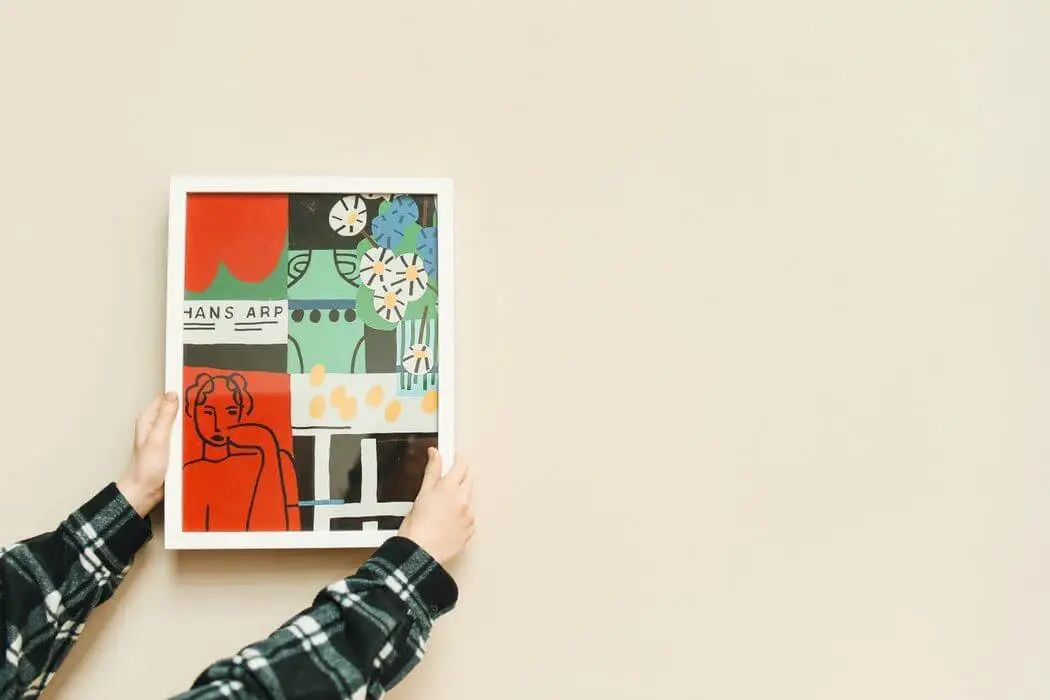
Artwork is still one of the best ways to give your wall some much-needed flair, and it remains one of the most effective wall art ideas for anyone looking for blank wall ideas that feel elegant and intentional. A piece of art of any kind will definitely attract attention and give you a chance to create a sense of luxury and sophistication.
Choosing Between Framed Artwork and Canvas Prints
The format is also something to factor in. Framed artwork done right can add sophistication, while canvas prints offer a cleaner, more minimalist wall decor look. Both options can work beautifully depending on whether you want a classic, layered style or something more understated.
How to Position Artwork at Eye Level
Don’t forget to give placement enough thought, as hanging artwork in the correct place — usually at eye level — will likely give your room a stronger sense of cohesion and balance. Good wall art placement can make even simple pieces feel more considered, especially if you are exploring gallery wall arrangements or trying to make empty walls look more expensive.
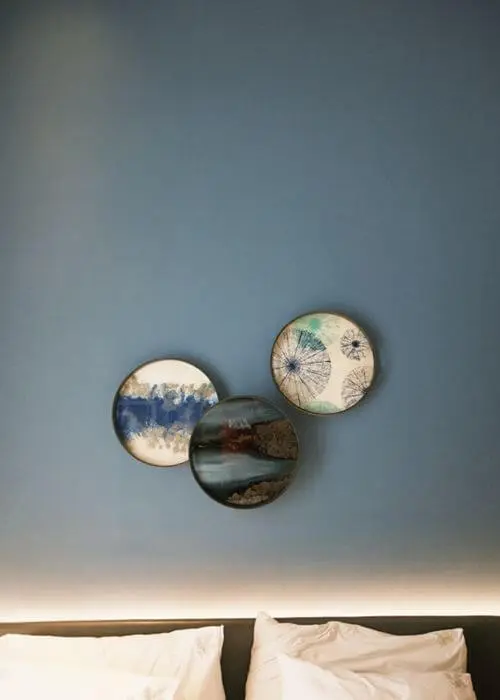
Add Texture with Wall Panelling and Decorative Mouldings
A flat surface can become a lot more interesting once texture is part of the equation. Wall panelling and decorative mouldings provide that extra architectural detail that makes a space feel that bit more appealing. They add depth, elegance, and visual interest without needing to go overboard, which is why they remain some of the most effective wall decor ideas without painting.
Why Wood Slat Wall Panelling Ideas Are Trending
The best example is probably wooden slats, which have risen in popularity in recent years because they remain simple while adding texture to walls and creating a more refined, deliberately designed feel. As wood slat wall panelling ideas continue to trend, they have become a popular way to introduce textured walls and a more contemporary approach to interior wall design.
Statement Mirrors: Adding Light, Depth, and the Illusion of Space
When it comes to interior design, mirrors are great for our walls because they actually do a couple of important things at once. Firstly, statement mirrors help spread light around a room and can, as a result, give it more of a unique feel. Secondly, if they’re large enough — for example, occupying most of a wall — they can also serve to enlarge a space by making it seem bigger than it is, which is why mirror wall decor remains one of the smartest choices for smaller interiors.
Best Mirror Placement for Small Rooms
To get the most out of your mirrors, it’s best to position them opposite windows, because then they will reflect the light around the room and brighten the space with more natural light. This is also one of the best mirror placement for small rooms strategies if you want to improve brightness and visual depth at the same time.
How to Make a Room Look Bigger with Mirrors
Large mirrors can create the illusion of extra square footage by reflecting both light and surrounding space. If you’re wondering how to make a room look bigger with mirrors, the answer is usually to choose one generously sized mirror and place it where it can maximise light and openness.
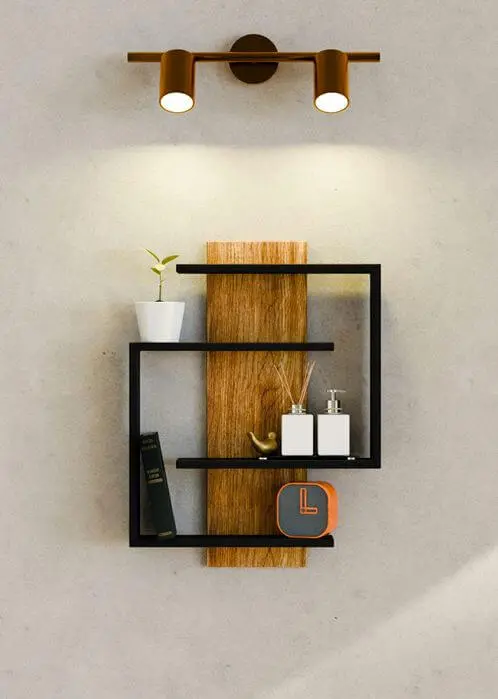
Floating Shelves for Decor and Storage
If you’re after something that’s a bit more practical, then you might want to give floating shelves for wall decor a try. They can be used to both bring your walls to life and provide a little extra storage space. Floating shelves are often designed to be aesthetically pleasing, so you won’t need to worry about them looking messy — unless you overcrowd them.
How to Style Floating Shelves Without Clutter
These shelves are widely available in a range of different varieties, so you’ll almost certainly find one that best suits your space, whether you’re going for something sleek and modern or perhaps a bit more traditional. The key to how to style floating shelves well is to balance practical storage with decorative objects, keeping enough breathing room so the display still feels intentional.
What to Display on Floating Shelves
I’d recommend using them as an opportunity to turn some of your most treasured possessions into art, like vinyl records, books, pottery, or other carefully chosen home accessories. This kind of floating shelf decor combines personality with function and can work especially well in living rooms, bedrooms, or smaller apartments.
Affordable Ways to Decorate a Blank Wall
It is possible to elevate your walls without having to put them through a complete transformation. This can be done using some affordable ways to decorate a blank wall, such as adding art pieces, mirrors, texture, and shelving. Even small changes can help transform a room, making it feel more stylish and inviting without the cost of a full redesign.
If you are looking for wall decor ideas on a budget, these options are a strong place to start because they offer flexibility, visual impact, and a relatively easy update for both homeowners and renters.
How to Elevate Your Walls Instantly — Quick Recap
The best wall decor ideas do not need to be complicated. Whether you choose artwork, decorative wall panels, mirrors, or shelving, each option can help create a more inviting and intentionally styled room. If you have been wondering how to decorate walls without committing to a major renovation, focusing on art, texture, light, and storage is one of the easiest ways to transform bare walls into beautiful features.
How to Elevate Your Walls: A Quick Step-by-Step Guide
Choosing artwork that fits the scale of your wall is one of the most important steps in getting your wall decor ideas right. A piece that’s too small can look lost, while something oversized may overwhelm the space.
Here’s a simple rule to follow:
For a wall above a sofa, sideboard, or bed, the artwork should cover roughly two-thirds to three-quarters of the width of the furniture below it. This creates a visual connection between the two and keeps the wall feeling balanced.
If you’re working with a large blank wall that has no furniture beneath it, go bigger than you think you need to. A single oversized piece or a well-planned gallery wall arrangement will have far more impact than a small frame floating in the middle of an empty surface.
When in doubt, try taping the outline of the artwork’s dimensions on the wall with painter’s tape before you commit. It’s a simple trick, but it gives you a much clearer sense of proportion before anything goes up.
Quick sizing reference:
Wall / Furniture Width
Recommended Art Width
150 cm sofa
100–115 cm artwork
120 cm sideboard
80–90 cm artwork
Large empty wall (200 cm+)
120–160 cm artwork or gallery arrangement
Narrow hallway wall
40–60 cm artwork or vertical piece
The goal isn’t to fill every centimetre — it’s to create a sense of visual balance that makes the wall feel intentional rather than empty.
This is one of those things that sounds obvious but is surprisingly easy to get wrong. Most people hang artwork too high, which disconnects it from the rest of the room and makes it feel like an afterthought.
The standard rule:
The centre of the artwork should sit at roughly 145–150 cm from the floor (or about 57–60 inches). This is considered average eye level and is the guideline most interior designers and gallery curators follow.
But context matters too:
Above a sofa or bed: Leave about 15–20 cm of space between the top of the furniture and the bottom of the frame. This keeps the art visually connected to the furniture below rather than floating too high.
In a hallway or entryway: Eye level still applies, but if you’re hanging a vertical piece in a narrow space, centering it on the wall both horizontally and vertically tends to feel most natural.
Gallery wall arrangements: Treat the entire grouping as one single piece. Find the visual centre of the whole arrangement and align that with eye level. Start by hanging the centrepiece first, then work outward.
Above a fireplace or high piece of furniture: You may need to go slightly higher than the standard 150 cm, but try not to push it too far up — the art should still feel part of the room, not part of the ceiling.
A practical tip:
Before you drill, hold the piece against the wall and ask someone to step back and tell you when it looks right. Or use a strip of painter’s tape at the intended centre point and step back yourself — you’ll quickly see if it feels too high or too low.
Good wall art placement is one of the simplest ways to make a room feel more polished and considered.
Adding wall panelling or decorative mouldings to a room doesn’t mean you have to redesign everything around it. The key is choosing the right type of panelling that complements what you already have, rather than competing with it.
Here’s how to approach it by style:
If your space is modern or minimalist:
Go for clean-lined wood slat panels or simple flat panelling in a neutral, matte finish.
Keep the colour consistent with the existing wall tone — same shade or just slightly darker creates depth without drama.
Avoid ornate mouldings; they’ll clash with the simplicity of the space.
If your space is traditional or classic:
Decorative mouldings and wainscoting work beautifully here.
Consider a heritage-inspired panel layout — rectangular frames on the lower half of the wall, painted in the same colour as the rest of the wall for a tonal, sophisticated effect.
This style pairs especially well with framed artwork hung above the panelling line.
If your space is Scandinavian or natural-leaning:
Light-toned wooden slats are ideal. Think pale oak, birch, or ash.
Keep other wall decor minimal to let the texture speak for itself.
This fits nicely with the broader trend toward natural materials and biophilic design in home interiors.
If your space is eclectic or bohemian:
Mix textures more freely — you might pair a section of textured wall panelling with a gallery wall of varied frames, or shelves styled with personal objects.
In this context, panelling acts as a grounding element that adds structure to a more layered, personality-driven room.
One general rule:
If you’re unsure, start with one accent wall rather than doing all four. This gives you the architectural depth without overwhelming the room, and it’s far easier (and more affordable) to install.
Statement mirrors are one of the most effective tools in interior design because they do two things at once — they brighten a room and they make it feel more spacious. But the impact depends almost entirely on where you place them.
The golden rule:
Position the mirror directly opposite or adjacent to the largest window in the room. This allows it to catch and reflect the maximum amount of natural light, bouncing it deeper into the space.
Room-by-room guidance:
Living room:
Place a large mirror on the wall opposite the main window. If you have a sofa against that wall, hang the mirror above it — this is also one of the best mirror placement for small rooms strategies because it maximises both light and the feeling of openness.
Hallway or entryway:
A mirror at the end of a narrow hallway reflects light from any nearby door or window and immediately makes the space feel less closed in.
Opt for a full-length or tall mirror to add a sense of height.
Bedroom:
Avoid placing mirrors directly opposite the bed if that bothers you, but a mirror on the wall next to the window — at a slight angle — still catches plenty of light without being the first thing you see when you wake up.
Dining room:
A large mirror on the wall adjacent to the window works well, especially if it reflects a chandelier or pendant light. This doubles the visual impact of the lighting and adds warmth in the evening.
What to avoid:
Don’t place a mirror where it only reflects a blank wall or a cluttered space — that defeats the purpose.
Avoid placing mirrors in very dark corners where there’s no light source to reflect.
If the mirror is opposite a window that faces direct harsh sunlight, the reflection might create glare rather than a pleasant brightness.
When positioned thoughtfully, a single well-placed mirror can do more for a room’s atmosphere than almost any other wall decor idea.
Floating shelves are one of the most versatile wall decor options because they combine storage and display in a clean, modern way. But the difference between shelves that look curated and shelves that look cluttered usually comes down to a few simple principles.
The core rules:
Rule 1: Use the “rule of three”
Group items in odd numbers — usually three or five per shelf. Odd groupings naturally look more balanced and visually interesting than even ones.
For example: a small plant, a book stack, and a ceramic vase make a simple but effective trio.
Rule 2: Vary the height and shape
Mix tall, medium, and short objects on each shelf. A tall vase next to a stack of books next to a small candle creates movement for the eye.
Avoid lining up objects that are all the same height — it’ll look like a product display, not a styled shelf.
Rule 3: Leave breathing room
Negative space is your friend. Don’t feel like you need to fill every centimetre.
A good benchmark: leave about 30% of the shelf surface empty. This keeps the display feeling intentional, not packed.
Rule 4: Layer and lean
Lean a small framed print or postcard behind other objects for depth.
Layering items in front of and behind each other makes the shelf feel three-dimensional rather than flat.
Rule 5: Stick to a loose colour palette
Pick 2–3 complementary tones and keep the objects within that range.
This doesn’t mean everything has to match — just that the overall look feels cohesive rather than random.
What works well on floating shelves:
Object Type
Why It Works
Small potted plants or succulents
Adds life and a touch of green
Book stacks (horizontal)
Creates height variation and warmth
Ceramic vases or bowls
Introduces shape and texture
Framed photos or small prints (leaned)
Adds personality without dominating
Candles or small sculptural objects
Fills gaps subtly
Vinyl records, magazines, or personal items
Makes the display feel personal
What to avoid:
Don’t use shelves as storage dumping grounds — if it doesn’t look good on display, it should probably go in a drawer.
Avoid too many small items — they make shelves look busy. A few well-chosen pieces always look better than dozens of tiny trinkets.
If a shelf feels crowded, remove one item. Almost every time, less looks better.
Good floating shelf decor is really about editing. Start with more than you need, then take things away until the shelf feels just right.
Frequently Asked Questions About Wall Decor
thetrendandstyle.com is a proud member of the Somut Medya Internet Advertising — publishing network, dedicated to delivering trustworthy, experience-led, lifestyle content across travel, fashion, and modern living.
Photo by Polina Tankilevitch , Dimas Aji Kresnanto and Puscas Adryan on Unsplash